Into the Future with the NMCWM and the CBMSO
“The power of noble deeds is to be preserved and passed on to the future.” – Union Brigadier General Joshua Lawrence Chamberlain
It’s been 30 years since the National Museum of Civil War Medicine opened its doors in 1996 to share its premier collection of medical artifacts and the inspiring history of healthcare innovation during the Civil War. As the number one ticketed attraction in Frederick, Maryland, we have always been conscious of the changing ways that museums reach out to their audiences. Starting this year, we are redefining ourselves with a multi-million-dollar redesign of our exhibits, website, and publications.
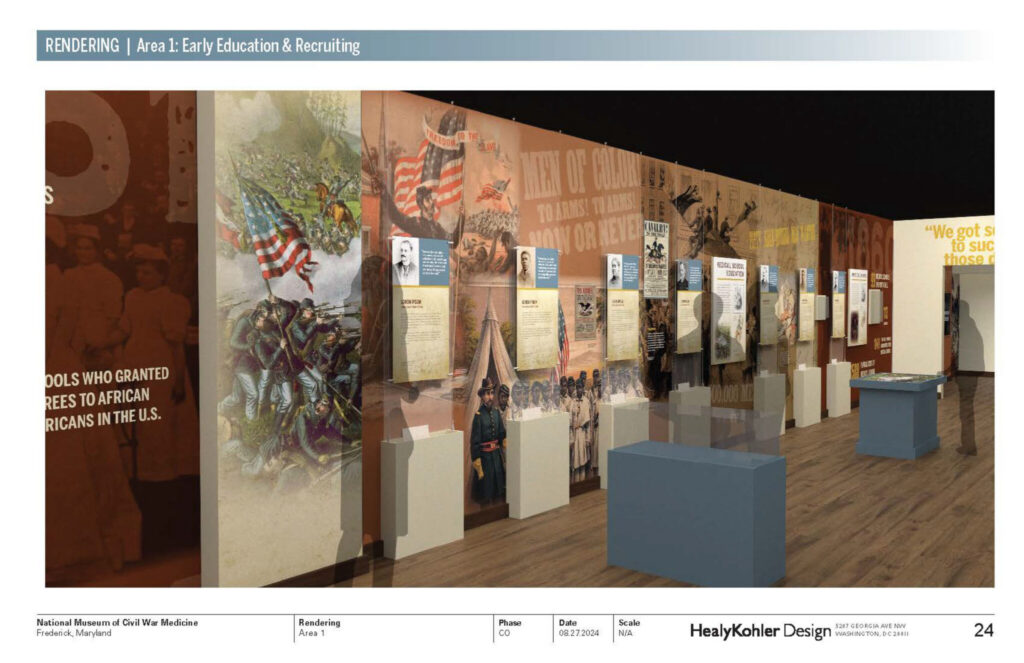
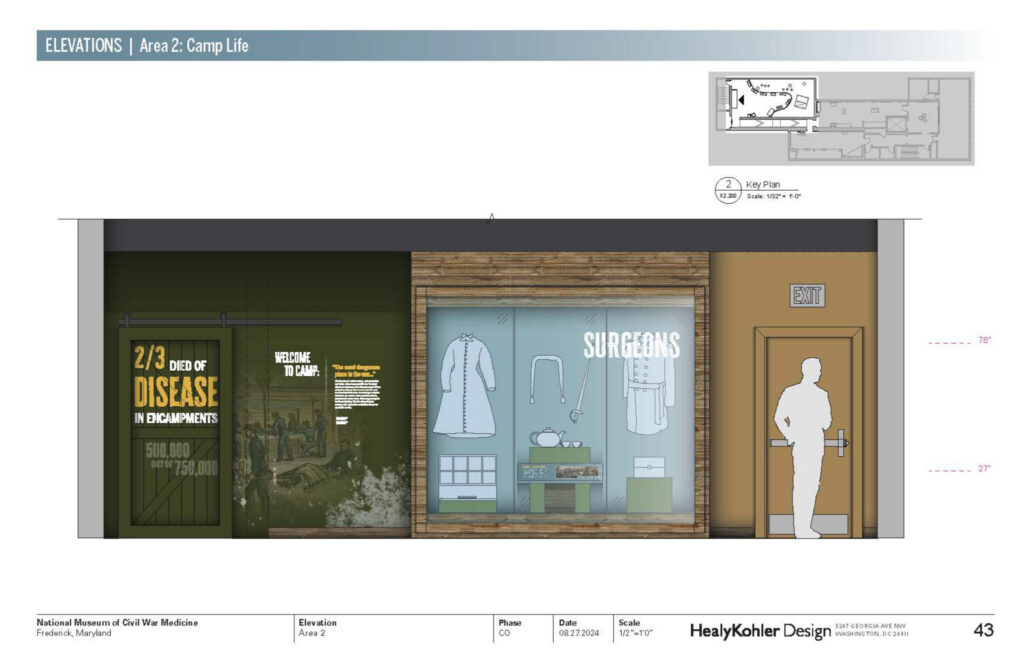
Our galleries are undergoing a dramatic and important upgrade, incorporating new technology, imagery, and interpretive tools that encourage visitors to explore Civil War medicine through a diverse selection of personal journeys and experiences. We will tell even more stories of the caregivers who placed themselves in harm’s way to tend to the wounded and dying; the common soldiers, citizens, and patients; and the innovators who quickly improvised and organized, bringing calm to chaos in ways that forever changed medicine and healthcare and still impact us today. We hope to have our total upgrade completed by May 2027.
But what will the next five years look like once our physical and virtual presence has been updated? As a NATIONAL museum, it is imperative that our outreach becomes more than regional. We have always offered “virtual field trips” and guest lectures via Zoom, but it may be more important to have a physical presence outside our local area. Several of our staff have gone to conferences as guest speakers and/or hosted an information table, and it would be great if we could expand our presence at events in other areas or even at national conferences. Offering in-person programs to schools would also be ideal.
As the only museum dedicated to Civil War medicine, we also need to position ourselves as go-to experts on the topic. This would include requests from media, authors, documentarians, and other historians to interview our staff or to use our museum exhibits and research library as resources. It would also involve outreach to other Civil War museums and sites, local libraries, and like-minded groups. We have designed a brochure that lists our available resources, and we should make this available at all of the previously mentioned sites, as well as on our website along with teacher resources. An increase in coverage outside the local media outlets would also be beneficial in branding us as a national museum, so perhaps we should explore doing more widespread press outreach.
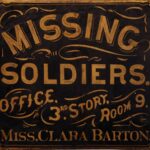
Plans for the Clara Barton Missing Soldiers Office Museum are in the works as well. We hope to upgrade the exhibits by adding more artifacts and better lighting, and more information panels in the rooms. In addition, we would like to feature the history of the building not just as Clara Barton’s living and working space, but also as an example of 19th century boarding house life in Washington, D.C. This would broaden the appeal of the museum beyond Barton and the Civil War. To facilitate this, we will be adding more furniture to the rooms to give it a more lived-in look. Plans include more furniture, including desks and packing boxes, to be added to the large main room, which was the actual Missing Soldiers Office, in order to make it look more like it did when Barton was working there. We have seen a large increase in visitation over the past couple of years due to the addition of walking tours and in-house events such as guest speakers and our “Faces of Civil War Nurses” exhibit, which we hope to expand as well. There has also been outreach to various like-minded groups in the D.C. area, including the American Red Cross, the National Park Service site at Glen Echo, Ford’s Theatre, and various women’s history organizations, to help position the Missing Soldiers Office Museum as one of the premiere attractions in D.C. It is our hope to continue to improve the site through updating the exhibit space and by increasing its visibility with the general public.
The history of Civil War medicine depends on us, and continuing to improve both of these sites will ensure that story will be told for decades to come.
About the Author
Tracey McIntire earned her BA in English at Rivier College in Nashua, NH. She is Lead Educator at the National Museum of Civil War Medicine and an interpretive volunteer at Antietam National Battlefield. She is also an active Civil War living historian, where she portrays a woman soldier in various guises.
Tags: Civil War, civil war medicine, Civil War nurses, Clara Barton, Clara Barton Missing Soldiers Office, DC, Washington, Washington DC, Women's History Posted in: Uncategorized