Blog
Posts Tagged ‘Missing Soldiers Office’
Despite the awe-inspiring achievements of the engineers who served in the Civil War, their role does not often conjure grand ideas of heroism. The infantry, cavalry, and artillery made up the largest elements of the Union Army, and as combatants, their war stories have captured public attention and popular imagination. Engineers constituted […]

“Cornelia Hancock’s Civil War: A Heart Touched by Fire From Gettysburg to the Grand Review” presented by Carolyn Ivanoff About the Topic: This presentation will introduce attendees to Quaker nurse Cornelia Hancock and the new Civil War biography by Carolyn Ivanoff. Hancock nursed fearlessly and devotedly from the Battle of Gettysburg to […]
The Washington Monument rises prominently above the city of Washington, D.C., serving as a distinguished landmark known around the world. Although the Washington Monument is no longer the tallest structure globally—having once held that distinction at 555 feet—it continues to be recognized as the tallest free-standing stone structure in the world. Visitors […]

Join us for a conversation on the preservation of Clara Barton’s legacy at two historic sites: the Clara Barton National Historic Site in Glen Echo, MD, and the Clara Barton Missing Soldiers Office Museum in Washington, DC. Speakers will share the preservation history of the Missing Soldiers Office and what projects are […]

The day after Virginia’s secession in May 1861, Union troops marched from Washington to occupy its neighbor Alexandria. A former powerhouse in the slave trade, Alexandria was the first Confederate city in Virginia to be occupied during the Civil War and governed under strict martial law. Overnight, this bustling urban town on […]
In August of 1863, President Lincoln praised the efforts of the Union Navy: “…Nor must Uncle Sam’s Web-feet be forgotten. At all the watery margins they have been present. Not only on the deep sea, the broad bay, and the rapid river, but also up the narrow muddy bayou, and wherever the […]
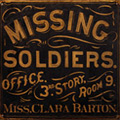
The only weapon on display at the museum is a rusty socket bayonet discovered in 1996 by Richard Lyons in the attic with the rest of Clara Barton’s belongings It can now be found in a case on the third floor. As the building was a boarding house during the Civil War, […]
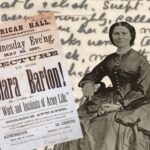
The end of the Civil War brought an end to the dangers Clara Barton faced as a volunteer army nurse, but it did not bring an end to her work. In March 1865, with the support of President Lincoln, she accomplished the monumental task of establishing the Missing Soldiers Office—just weeks before […]

During the Civil War years, hundreds of thousands of soldiers wrote letters home, many containing card-sized photos of themself. By the end of the conflict, thousands of letters and images remained undelivered at the Dead Letter Office in Washington, D.C. For decades after the war, the employees of the Dead Letter Office […]
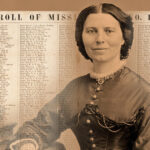
When thinking of reasons why people wrote the Missing Soldiers Office (MSO), it is assumed that they were family looking for loved ones. The search for Lieutenant Grover Young (or Youngs) of the 5th Kansas Cavalry initiated from a decidedly less personal source – a newspaper. Why would a newspaper be concerned […]